Showing posts with label Lifestyle. Show all posts

Monday, April 30, 2007

Big Company's Name Came From

Adobe - Came from name of the river Adobe Creek that ran behind the house of founder John Warnock.

Apache - It got its name because its founders got started by applying patches to code written for NCSA’s httpd daemon. The result was ‘A PAtCHy’ server -– thus, the name Apache.

Apple Computers - Steve Jobs was three months late in filing a name for the business because he didn’t get any better name for his new company. So one day he told to the staff: “If I’ll not get better name by 5 o’clock today, our company’s name will be anything he likes…” So at 5 o’clcok nobody come up with better name, and he was eating Apple that time… so he keep the name of the company ‘Apple Computers’.

CISCO - Its not an acronym but the short for San Francisco.

Google - The name started as a jokey boast about the amount of information the search-engine would be able to search. It was originally named ‘Googol’, a word for the number represented by 1 followed by 100 zeros. After founders – Stanford grad students Sergey Brin and Larry Page resented their project to an angel investor, they received a cheque made out to ‘Google’

Hotmail - Founder Jack Smith got the idea of accessing e-mail via the web from a computer anywhere in the world. When Sabeer Bhatia came up with the business plan for the mail service, he tried all kinds of names ending in ‘mail’ and finally settled for hotmail as it included the letters “html” - the programming language used to write web pages. It was initially referred to as HoTMaiL with selective upper casing.

Hewlett-Packard (HP) - Bill Hewlett and Dave Packard tossed a coin to decide whether the company they founded would be called Hewlett-Packard or Packard-Hewlett, and the winner was NOT Bill…the winner was Dave.

Intel- Bob Noyce and Gordon Moore wanted to name their new company ‘Moore Noyce’ but that was already trademarked by a hotel chain, so they had to settle for an acronym of INTegrated ELectronics = INTEL

Lotus (Notes) - Mitch Kapor got the name for his company from ‘The Lotus Position’ or ‘Padmasana’. Kapor used to be a teacher of Transcendental Meditation of Maharishi Mahesh Yogi.

Microsoft - Coined by Bill Gates to represent the company that was devoted to MICROcomputer SOFTware. Originally christened Micro-Soft, the ‘-‘ was removed later on.

Motorola - Founder Paul Galvin came up with this name when his company started manufacturing radios for cars. The popular radio company at the time was called Victrola.

ORACLE - Larry Ellison and Bob Oats were working on a consulting project for the CIA (Central Intelligence Agency). The code name for the project was called Oracle (the CIA saw this as the system to give answers to all questions or something such). Acronym for: One Real A****** Called Larry Ellison??

Red Hat - Company founder Marc Ewing was given the Cornell lacrosse team cap (with red and white stripes) while at college by his grandfather. He lost it and had to search for it desperately. The manual of the beta version of Red Hat Linux had an appeal to readers to return his Red Hat if found by anyone!

SAP - “Systems, Applications, Products in Data Processing”, formed by 4 ex-IBM employees who used to work in the ‘Systems/Applications/Projects’ group of IBM.

Sony - From the Latin word ’sonus’ meaning sound, and ’sonny’ a slang used by Americans to refer to a bright youngster.

SUN - Founded by 4 Stanford University buddies, SUN is the acronym for Stanford University Network.

Xerox - The inventor, Chestor Carlson, named his product trying to say dry’ (as it was dry copying, markedly different from the then prevailing wet copying). The Greek root `xer‘ means dry.

Yahoo!- The word was invented by Jonathan Swift and used in his book ‘Gulliver’s Travels’. It represents a person who is repulsive in appearance and action and is barely human. Yahoo! founders Jerry Yang and David Filo selected the name because they considered themselves yahoos.


- hemmy goblog -

Thursday, April 19, 2007

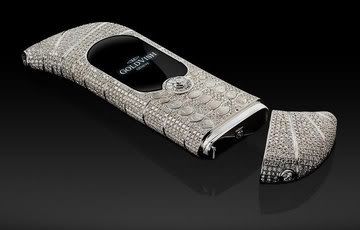
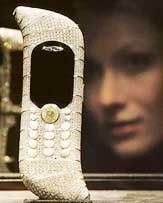
World's Superphone - Goldvish 'Le Million' Piece Unique


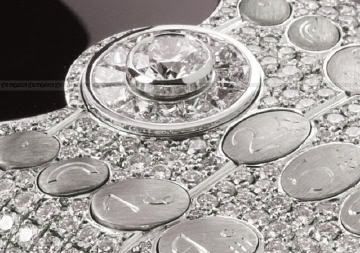
Designer Emmanuel Gueit's creation is unusually functional as far as super-expensive phones go. Such devices tend to exist solely to look pretty at parties that people like me don't get invited to. For a staggering $1.3 million, however, there'd be no excuse to offer anything less. But with a VVS-1 grade diamond to match every bit per second in its Bluetooth data rate, it's hardly an office mainstay.

A limited edition of 100 pieces will be distributed worldwide. The PLATO collection is only available on special request. GoldVish makes cell phones of unparalleled luxury backed by the highest levels of Swiss craftsmanship and precision.

Wow, just for a cellphone you spent all your bank cash, or maybe you couldn't afford to buy the keypad. its amazingly exclusive phone ever.

The GoldVish collection is in jewelry and communications design. Each GoldVish cell phone is equipped with the latest in mobile technology (quad-band for effortless worldwide reception, a camera and MP3 player, along with other features) and is hand-made in Switzerland, the home of ''haute horlogerie''.

The GoldVish cell phone, the most exclusive and expensive ever created, was designed by Emmanuel Gueit creative director of GoldVish. Gueit is well known in the watch and jewelry industry and designed the Audemars Piquet Royal Oak Off shore and the Z1 & Z2 of Harry Winston, a guarantee of true perfection, style and glamour.

Aiming for an exclusive design and unmatched excellence, GoldVish has used only top quality materials in the cell phone's design, including 18-karat solid gold, available in rose, yellow or white gold, and diamonds, all of D-E color and none less than VVS-1 clarity grade, as certified in the accompanying diamond grading reports.


- goldvish goblog -

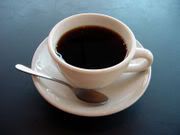
Coffee (etymology & history)

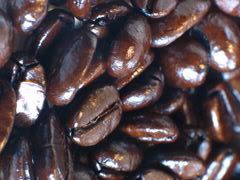
Coffee is a widely consumed beverage prepared from the roasted seeds—commonly referred to as beans—of the coffee plant. Though usually served hot it can also be served cold. A typical 7 fluid ounce (ca. 207 mL) cup of coffee contains 80–140 milligrams of caffeine, depending on the bean and method of roasting and preparation. Some people drink coffee "black" (plain), others sweeten their coffee or add milk, cream or non-dairy creamer. Coffee represents 71% of all the caffeine consumption in the United States, followed by soft drinks and tea. Coffee, along with tea and water, is one of the most popular beverages world-wide, its volume amounting to about a third of that of tap water in North America and Europe. In 2003, coffee was the world's sixth largest agricultural export in terms of value, behind wheat, maize, soybeans, palm oil and sugar.

ETYMOLOGY
The English word "coffee" is believed to be derived ultimately from the Arabic word qahhwa; it is called būnn or būnnā in Ethiopia in Amharic and būnnī in Tigrinya, and other variations on the original būnn in other languages. Coffee's Arabic name, qahwa is a truncation of qahwat al-būnn or wine of the bean. Traditional Islam prohibited the use of alcohol as a beverage, and coffee proved to be a suitable alternative.

The Arabic qahhwa was borrowed by Ottoman Turkish as kahve, which in turn was borrowed into Italian as caffè and French as café. Early forms date to as early as the last decade of the 16th century, but the word "coffee" itself did not come into use until the early to mid 1600s.

HISTORY
The history of coffee can be traced to at least as early as the 9th century, when it appeared in the highlands of Ethiopia and maghreb el Arabiy (which today consists of Algeria, Morocco and Tunisia). Whence it spread to Egypt and Yemen, and by the fifteenth century had reached Persia, Egypt, Turkey, and northern Africa.

From the Muslim world, coffee spread to Europe, and became popular there during the seventeenth century. The Dutch were the first to start large-scale importation of coffee into Europe, and eventually smuggled out some seedlings in 1690, as the Arabs were not allowed to export the plants or unroasted seeds. This led to coffee growing in Java, which was then a Dutch possession. In 1538, Leonhard Rauwolf, a German physician, having returned from a ten-year trip to the Near East, gave this description of coffee:
"A beverage as black as ink, useful against numerous illnesses, particularly those of the stomach. Its consumers take it in the morning, quite frankly, in a porcelain cup that is passed around and from which each one drinks a cupful. It is composed of water and the fruit from a bush called bunnu."

When coffee reached the American colonies, it was initially not as successful as it had been in Europe, as colonists found it a poor substitute for alcohol. However, during the Revolutionary War, the demand for coffee increased to such an extent that dealers had to hoard their scarce supplies of it and raise prices dramatically; part of this is due to the reduced availability of tea from British merchants. Americans' taste for coffee grew during the early nineteenth century, following the War of 1812, which had temporarily cut off access to tea imports, and high demand during the American Civil War as well as many advancements in brewing technology cemented the position of coffee as an everyday commodity in the United States. Today coffee is a staple of the North American breakfast and morning commute.

- wikipedia goblog -